



Research symposium on Cradle to Cradle and the circular economy
Research into products, materials
and economic systems
that make a positive contribution
Date: September 16 + 17, 2026
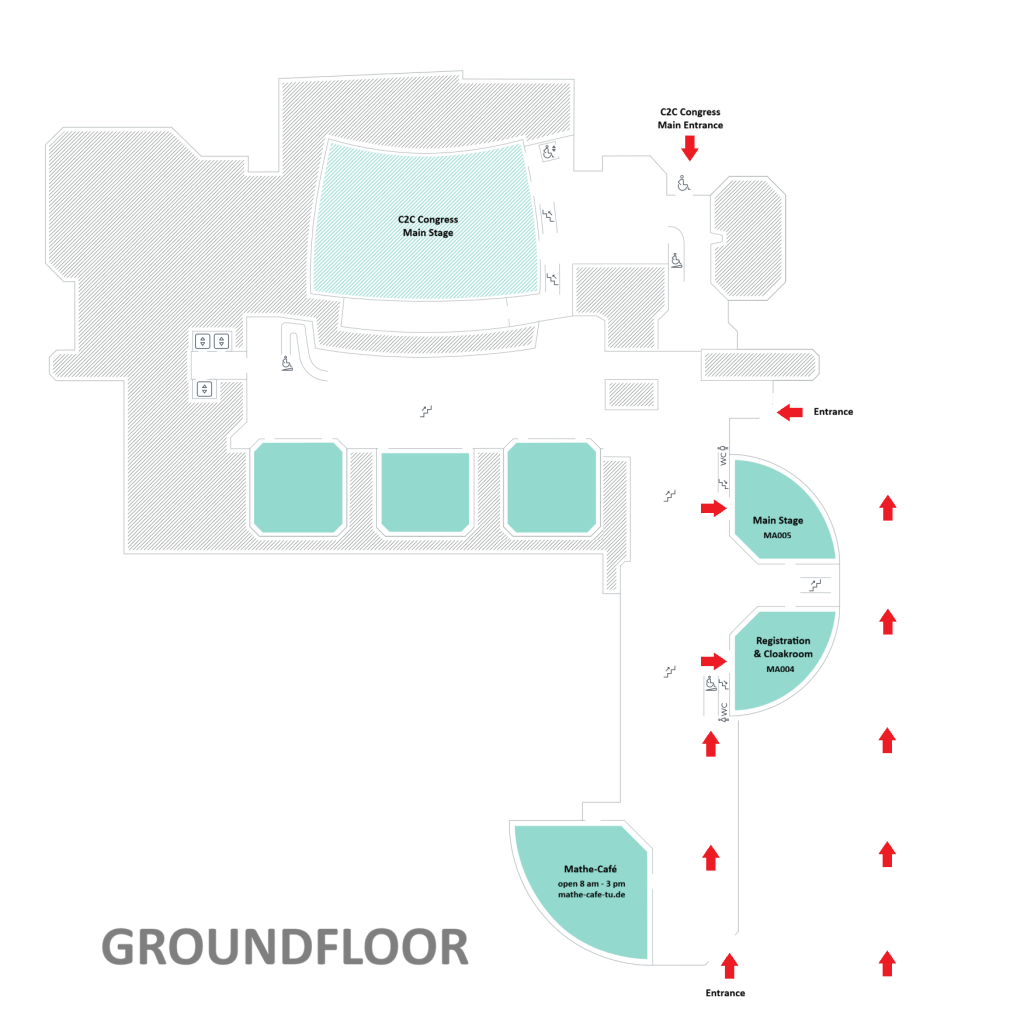
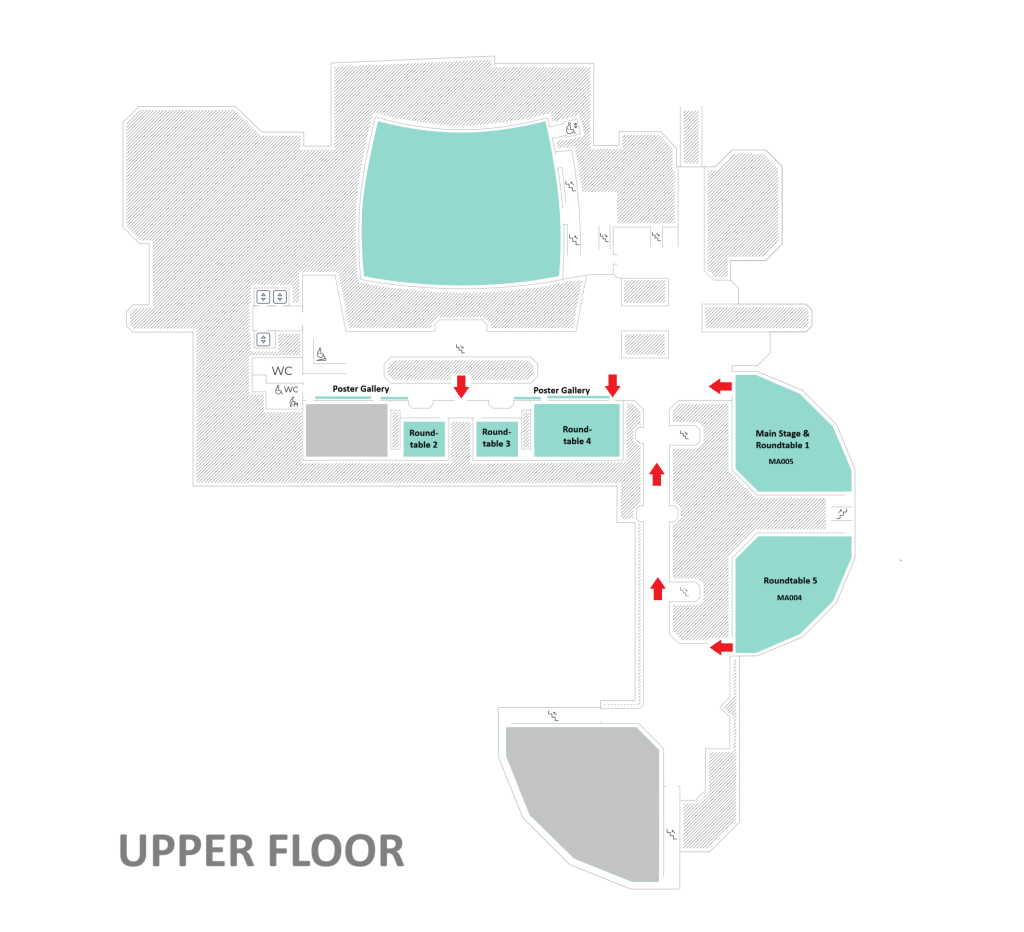
Location: TU Berlin, Mathematics Building
Submission deadline: June 21, 2026
Language: English
About
Cradle to Cradle and the Circular Economy show how products, systems, and economic structures can be designed to make a positive contribution. Research plays a central role in this. It develops concepts further, tests new approaches, and connects different disciplines.
The Research Symposium on Cradle to Cradle and the Circular Economy brings together researchers working on these issues. The aim is to raise awareness of current research, exchange findings, and develop new perspectives for business and implementation. We welcome contributions from both established researchers and early-career scholars. Students who have completed Bachelor’s or Master’s theses are also invited to discuss their results in roundtable sessions.
The symposium is an official side event of the 10th International Cradle to Cradle Congress at TU Berlin and is part of an international exchange on innovation, design, and economic transformation.
Focus: Economy and Business Models
In addition to technical and engineering perspectives, there is a special focus on economic and management issues.
The focus is on, among other things:
- Circular business models (e.g., use over ownership)
- Strategies for businesses in a circular economy
- Economic framework conditions and financing models for circular innovations
- Scaling circular innovations
- Eco-effectiveness and striving for positive impacts
- Supporting diversity in ecosystems, culture, and society for resilience
- Social and environmental impacts of circularity
The aim is to link research more closely with economic implementation.
If contributions have a technical and/or engineering background, they should at least include an outlook on the economic potential of the presented content.
Call for Abstracts
We invite researchers and students to submit their work and become part of the symposium.
We are looking for contributions that examine:
- how products and materials can circulate permanently
- how business models for circular systems work
- which economic conditions enable transformation
- how technological innovation can be linked to economic implementation
- what role material health and product quality play in circular systems
The symposium offers space for scientific exchange, interdisciplinary dialogue, and new perspectives on economic transformation.
With the upcoming call for papers by the Journal of Circular Economy for a special issue focusing on C2C, the symposium offers an excellent opportunity to bring your research into dialogue. Present your work, gain new perspectives, and receive valuable feedback as a foundation for a potential submission.
Program
The event will be held in English.
Wednesday, 16.09.2026
Nora Sophie Griefahn | Executive Director, Cradle to Cradle NGO
Prof. Dr. Dodo zu Knyphausen-Aufseß | Head of the Department of Strategic Leadership and Global Management, Technical University of Berlin
Prof. Dr. Michael Braungart | Professor emeritus & Geschäftsführer, Leuphana Universität Lüneburg & Braungart EPEA
Speaker: Ausgewählte Kandidaten aus der Ausschreibung zur Einreichung von Abstracts
1) Learning, Competency-Building & Behavioral Change (Room: MA005)
Antonio Guillebeau | University of Zurich
Greetje Krüger | Institut für betriebliche Bildungsforschung (IBBF)
Christian Schlimok | Anhalt University of Applied Sciences / Berlin University of the Arts
2) Materials Science & Technical Circularity (Room: MA143)
Anna Magdalena Baecke | Helmholtz-Zentrum Dresden-Rossendorf e.V.
Frank Balle | Department of Sustainable Systems
Engineering (INATECH), University of Freiburg
Simone Bertoldi | Helmholtz Centre for Environmental Research
Tim Kurtz | Karlsruhe Institute of Technology (KIT)
3) Circular Business Models, Markets & Policy Instruments (Room: MA142)
Jannis Duckek | ESCP Business School Berlin
Lotte Klara Krüger | Lund University
Jonathan Lambers | German Plastics Center SKZ
Liliana Teale | University of Portsmouth
4) Circular Assessment: Products, Materials & Value Chains (Room: MA141)
Svenja Jahn | Institut für Textilrecycling Augsburg gGmbH
Bareera Maryam | University of Technology Sydney, Australia
Simone Syhre | HTW Berlin
Haixiang Qian | Leuphana University
5) Social Dimensions of Cradle to Cradle (hybrid: Room MA004/Zoom)
Shalini Fichtl | Leuphana University
Mia Wilkens | Leuphana University
Alexander Roith | Leuphana University
Priya Saikumar | University of Oxford
Hannes Geist | Department of Sustainable Systems Engineering (INATECH), University of Freiburg
Paul Musenbrock | Leuphana University
Viktoria Esker | Wuppertal Institute for Climate, Environment and Energy
Konstantinos Tsagarakis | Technical University of Crete
Nora Sophie Griefahn | Executive Director, Cradle to Cradle NGO
Prof. Dr. Dodo zu Knyphausen-Aufseß | Head of the Department of Strategic Leadership and Global Management, Technical University of Berlin
subject to change.
Thursday, 17.09.2026
Nora Sophie Griefahn | Executive Director, Cradle to Cradle NGO
Prof. Dr. Dodo zu Knyphausen-Aufseß | Head of the Department of Strategic Leadership and Global Management, Technical University of Berlin
Milena Pereira Kozlowski | University of Padova
Graham Anderson | University College London
Hannah Morris | Swansea University
Frank Rackwitz | Technical University of Berlin
Ritu Sharma | Leuphana University
11:15 - 11:45 a.m.
Dr. Simran Talwar | Program Lead & Research Director, Institute for Sustainable Futures, University of Technology Sydney
–
This session will uncover case studies and evidence to demonstrate how research and academia are advancing the Cradle to Cradle transition, through real world practical insights at the intersection research, policy and business.
Nora Sophie Griefahn | Executive Director, Cradle to Cradle NGO
Prof. Dr. Dodo zu Knyphausen-Aufseß | Head of the Department of Strategic Leadership and Global Management, Technical University of Berlin
subject to change.
Participate as a Visitor
You can participate in the symposium even if you do not submit your own work.
Participation is free of charge. We look forward to seeing you there!
Organized by

Connection to the Cradle to Cradle Congress
The research symposium will take place immediately before the 10th International Cradle to Cradle Congress. Since 2014, the Congress has been the first and world’s largest platform for Cradle to Cradle and Circular Economy. 1,000 participants come together to exchange ideas and network: panel discussions with high-ranking speakers from politics and science, best practices from the business world, inspiring keynotes on the transformation of our society, and a wide range of networking opportunities.
The congress will take place on September 17-18, 2026 at the TU Berlin.
Confirmed speakers

Professor, Leuphana University of Lüneburg; Managing Director Braungart EPEA - International Environmental Research


Location
Technical University Berlin
Mathematics building
Straße des 17. Juni 136
10623 Berlin
Scientific Committee
- Chair: Prof. Dr. Dodo zu Knyphausen-Aufseß, TU Berlin (GER)
- Prof. Nancy Bocken, Maastricht University (NL)
- Prof. Dr. Michael Braungart, Leuphana University Lüneburg (GER)
- Prof. Dr. Martin Geissdoerfer, Monash Business School (AU)
- Prof. Dr. Erik Hansen, Johannes Keppler University of Linz (AT)
- Dr. Julian Kirchherr, Roskilde University (DK), Utrecht University (NL)
- Prof. Eike Roswag-Klinge, TU Berlin (GER)
- Dr. Simran Talwar, University of Technology Sydney (AU)
- Dr. Enes Unal, University of Exeter (UK)
Advisory Committee
- Dr. Lukas Gast, University College London (UK)
- Prof. Dr. Timo Hartmann, TU Berlin (GER)
- Prof. Dr. Silja Hartmann, TU Berlin (GER)
- Prof. Dr. Cornelius Herstatt, University of Auckland (NZL)
- Dr. Florian Hofmann, Institute for Ecological Economy Research (IÖW) (GER)
- Prof. Dr. Florian Lüdeke-Freund, ESCP Berlin (GER)
- Prof. Dr. Melanie Jaeger-Erben, BTU Cottbus-Senftenberg (GER)
- Prof. Dr.-Ing. Holger Kohl, TU Berlin / Fraunhofer IPK (GER)
- Dr. Laura Niessen-Wade, Maastricht University (NL)
- Prof. Konstantinos Tsagarakis, TU of Crete (GR)
Contact
For inquiries regarding the Research Symposium, please reach out to:
Dodo zu Knyphausen-Aufseß
Chairman of the Research Committee
Professor of Strategic Leadership and Global Management
Technische Universität Berlin
Mail: knyphausen[at]strategie.tu-berlin.de
Phone: +49 30 314 2875
Lara Gabe
Project Manager, Research Symposium
Cradle to Cradle NGO
Mail: symposium[at]c2c.ngo
Phone: +49 30 4677 4780
Spread the word!
Download our Media Kit to share the Research Symposium at your university, college or institute.
FAQ – Research Symposium
Who can Submit Contributions?
The call is aimed at:
- Researchers who want to share new insights and innovations
- Bachelor’s and Master’s students who wrote their theses on the topic
Why submit an abstract?
By submitting an abstract, you can:
- Present your research to an international scientific audience
- Exchange ideas with researchers from various disciplines
- Network with other experts in the field
- Develop new perspectives for research and implementation
- Become part of the international Cradle to Cradle and Circular Economy community
Selected candidates will be invited to submit a full manuscript for consideration in a Special Issue of the Journal of Circular Economy (subject to the journal’s independent review process).
What are the Important Dates?
Date | Date |
Abstract Submission Deadline: | June 21, 2026 |
Acceptance Notification: | July 3, 2026 |
Your confirmation of participation: | July 10, 2026 |
Revision and Final Submission: | August 31, 2026 |
Conference Dates: | September 16+17, 2026 |
What is the Submission Process & Guidelines?
We welcome two types of submissions:
- Current research projects on C2C and CE
- Bachelor’s and Master’s theses
Please make sure to follow the submission guidelines:
Abstract Length: 2-3 pages 1200-1500 words (excl. tables, figures and sources)
Format: PDF document
Language: English English
To submit your application, please fill out the submission form and upload your abstract.
What is the Review Process?
All abstracts will be evaluated in a peer review process by the scientific committee.
The following criteria will be evaluated:
- Relevance to Cradle to Cradle and the Circular Economy
- Scientific quality, clarity of research question, and methodological rigor
- Contribution to advancing knowledge in business, economic, or implementation-oriented perspectives
How are Researchers Involved in the Symposium?
Accepted contributions will be presented as research pitches at the symposium.
Only Bachelor’s and Master’s theses
- Presentation in roundtable format with a senior researcher
- The abstracts will be shared among the participants in advance and discussed together.
- Presentation of research poster in a gallery walk (Poster format vertically DIN A1)
More information
We invite you to submit your current work in the following topics of interest, but not limited to:
- Material Science and Chemistry:
- Material health: Investigation of safe, non-toxic materials that are harmless to both humans and the environment.
- Biological and Technical Nutrients: Research on separating materials into biodegradable substances and those that can be kept in technical cycles.
- Design and Product Development:
- Design for Disassembly: Development of products that can be easily disassembled at the end of their life cycle to return materials back into the circular flow.
- Upcycling design: Focus on designing products that gain value during recycling or through subsequent use phases.
- Circular Economy and Economic Models:
- Closed-loop Systems: Research on models in which products and materials are reused or fully returned into biological or technical cycles after use.
- Economic Incentive Systems: Development of models that encourage companies to integrate regenerative processes into their production.
- Production Processes and Industrial Ecology:
- Circular Production Methods: Development of technologies that avoid waste and fully return raw materials into the production process.
- Industrial Symbioses: Research on networks where one company’s waste becomes a resource for another.
- Life Cycle Assessment (LCA) and Environmental Impact:
- Life Cycle Assessment: Examination of the environmental impacts of products throughout their entire life cycle to ensure they have positive environmental effects.
- Urban Planning and Architecture:
- Cradle to Cradle Building Design: Development of buildings made from healthy materials that are fully dismantlable and can be reintroduced into biological or technical cycles.
- Circular Urban Planning: Research on urban systems that avoid waste and maintain resources in a circular flow.
- Water and Energy Management:
- Renewable Energy Systems: Use of renewable energy in Cradle to Cradle production systems.
- Water Cycles: Utilization of water in closed-loop systems to ensure sustainable water use.
- Social and Political Aspects:
- Policy and Regulation: Investigation of policies that require or encourage companies to adopt Cradle to Cradle principles.
- Education and Awareness: Research on spreading knowledge about Cradle to Cradle in society and education systems.
Contributions on related topics are also welcome.